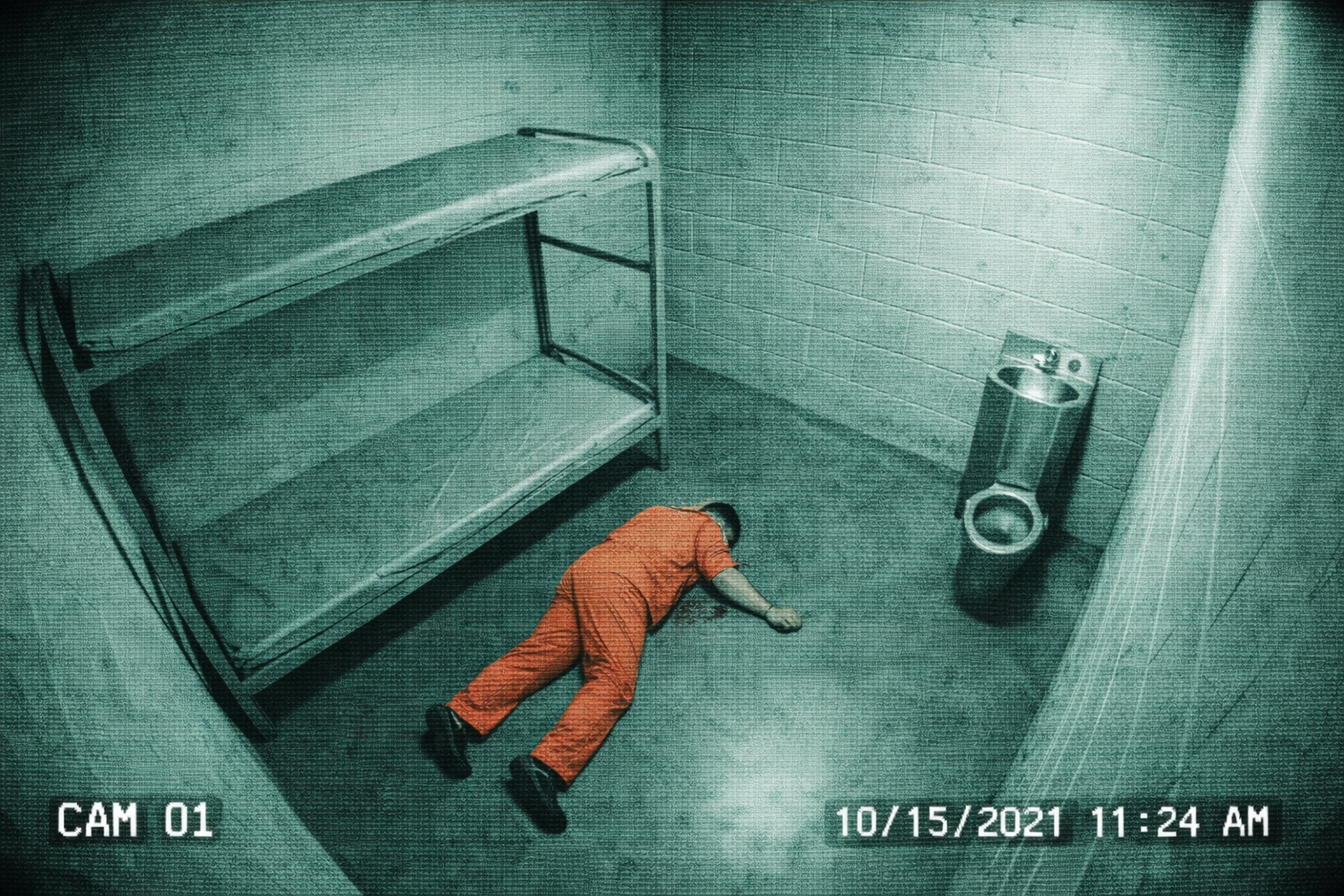
The Duty-of-Care Challenge
Detention facilities have an absolute legal duty of care over the people they hold. Failing to detect a medical emergency, self-harm event, or assault in a cell can result in death, lawsuits, and federal investigations. Yet officer-to-inmate ratios make continuous human monitoring of every cell impossible — especially overnight.
Traditional CCTV records video for after-the-fact review but provides no active prevention. Officers performing rounds cannot be in every cell simultaneously. AI cell monitoring closes this gap by watching every cell continuously and alerting human staff only when something requires attention.
What Police.live Detects in Cells
Police.live runs purpose-trained AI models on every connected cell camera, detecting events that matter to corrections operations:
- Medical emergencies — inmate down or motionless beyond configurable threshold (typically 30-60 seconds)
- Self-harm indicators — abnormal positioning, neck-area activity, repetitive motion patterns
- Fights and physical altercations — multi-person violence detection with severity classification
- Restricted substance use — smoking, vaping, makeshift pipe use detection
- Cell entry and exit tracking — automated headcount with timestamp logging
- Loitering in unauthorized cell areas — alert when someone is where they should not be
- Cell flooding or fire/smoke — early warning before traditional alarms trigger
How It Works
Deployment is straightforward: Police.live connects to your existing cell-block IP cameras via standard RTSP. The X-B3 AI processing unit sits in your server room and analyzes every camera feed simultaneously. The O-R3 operations console in your control room displays alerts, live feeds, and event history.
When the AI detects an event, an alert appears on the O-R3 with a timestamped video clip, severity classification, AI confidence score, and the cell location. Officers acknowledge the alert from the console and dispatch response. Every alert is logged for audit, after-action review, and incident documentation.
Reducing False Positives
A monitoring system that alerts on every shadow becomes useless within hours — staff turn off notifications. Police.live addresses this through tunable confidence thresholds, configurable cooldown windows, and zone-specific rules.
- Confidence thresholds — set per-detection-type minimums (e.g., only alert on violence detection above 85% confidence)
- Cooldown windows — suppress repeat alerts for the same event within a configurable time period
- Time-of-day rules — different sensitivity levels during day vs night, lockdown vs free movement
- Zone exclusions — exclude bunk areas from movement detection during designated sleep hours
- Approved-action exceptions — known officer rounds will not trigger loitering or unauthorized-presence alerts
Privacy & Inmate Rights Considerations
Inmate privacy is governed by federal and state regulations. Police.live is designed to support compliant deployment: video is processed on-premise (cloud reporting is optional and can be disabled for air-gapped sites), retention policies are configurable per cell zone (e.g., shorter retention for shower-area cameras), and all access events are logged for audit.
For facilities subject to PREA (Prison Rape Elimination Act) requirements, Police.live can be configured with cross-gender supervision enforcement — alerting when an officer of the opposite gender enters certain monitoring views.
Real-World Outcomes
Corrections facilities deploying continuous AI cell monitoring typically report:
- Faster response to medical emergencies — minutes saved when seconds matter
- Reduced suicide and self-harm incidents through early detection of warning behaviors
- Reduced staff fatigue from constant manual monitor watching
- Stronger evidence trail for incident reviews, internal investigations, and litigation defense
- Improved PREA compliance through automated cross-gender supervision tracking
- Reduced overtime costs as fewer officers are needed for continuous monitoring