Why On-Premises Matters for Law Enforcement
Law enforcement video data is among the most sensitive a government holds. Booking videos, body camera footage, suspect identification, evidence captures — all are subject to chain of custody requirements, criminal procedure rules, and constitutional protections. Sending this data to a third-party cloud creates liabilities most legal counsel will not accept.
Cloud-based AI surveillance vendors (Verkada, Coram, Avigilon Alta, etc.) market the convenience of "no servers to manage." But for law enforcement, that convenience comes at the cost of: storing CJI on third-party infrastructure, exposing data to cloud vendor employees, creating dependencies on internet uptime, and complicating CJIS audits with vendor-side compliance requirements.
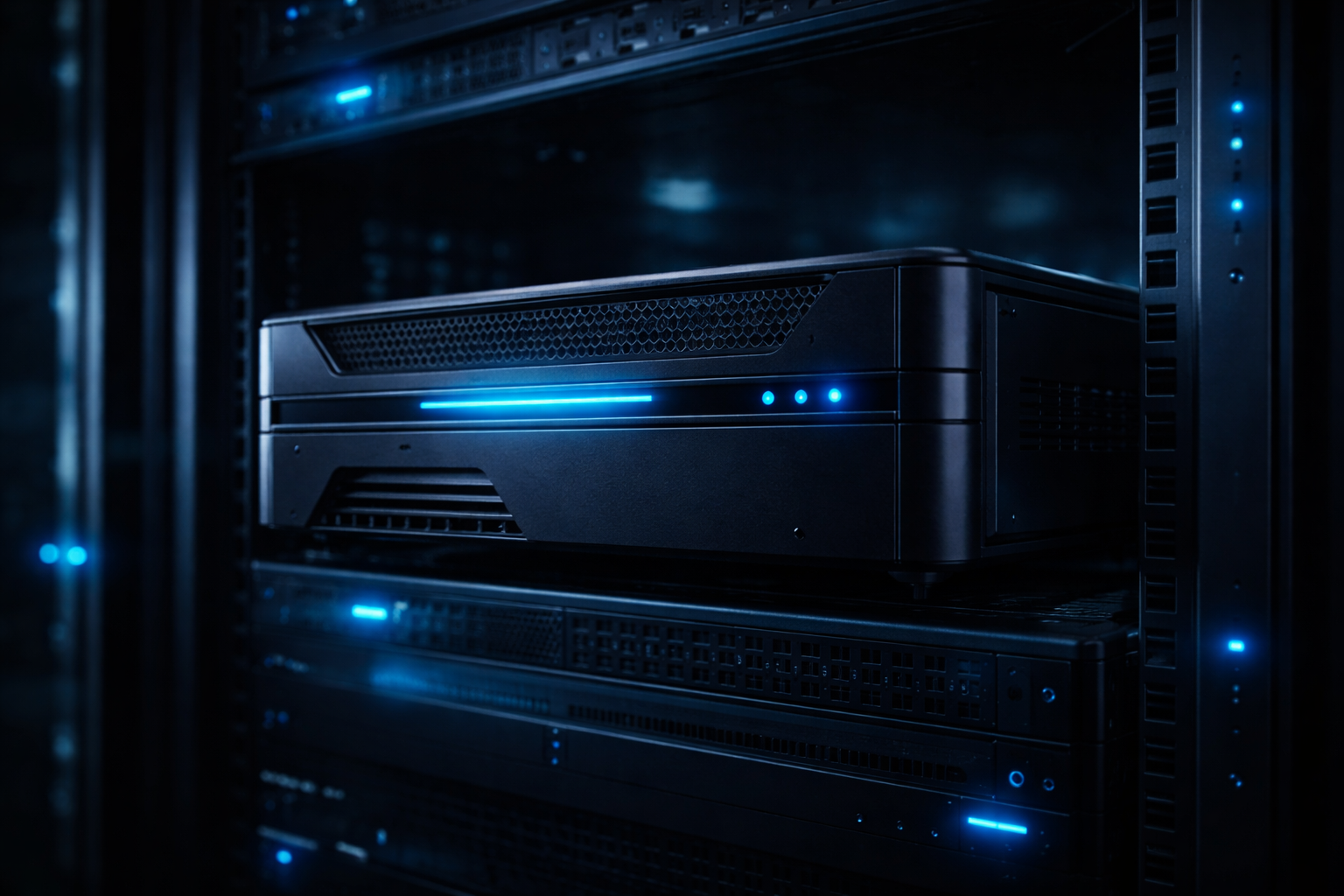
Police.live takes the opposite approach: every component runs inside your facility. The AI runs on the X-B3 appliance in your server room. The operations console (O-R3) is in your dispatch center. Cameras connect over your local network. Nothing crosses your firewall unless you explicitly enable optional cloud features.
What "On-Premises" Actually Means
Many vendors claim on-premises while still requiring cloud connectivity for AI inference, license validation, or management. Police.live's on-premises is genuine end-to-end:
- AI inference runs on local GPU hardware (X-B3) — no cloud calls per frame
- Facial recognition templates stored in the local on-premise database — cloud reporting is optional and can be disabled
- Configuration management via local web UI — no cloud control plane
- License validation works offline indefinitely — no cloud check-ins required
- Updates can be applied via offline package — no internet required
- Optional cloud features (remote monitoring, OTA updates) are explicitly opt-in
- Air-gapped deployment fully supported — no internet at all
Hardware Architecture
Police.live's on-premises architecture is delivered as physical hardware — not software you must install on rented servers:
The X-B3 is the AI processing unit. It contains GPU acceleration, storage, and networking. It sits in your server room, connects to your camera network, and runs all AI workloads. Multiple X-B3 units can be deployed for facilities with 40+ cameras, each handling a zone.
The O-R3 is the operations console. It connects to one or more X-B3 units over your local network and provides the live monitoring UI for operators. It is wall-mountable and silent, suitable for control rooms.
Both units contain no NDAA Section 889-prohibited components — free of the technology banned under U.S. federal procurement restrictions; deployed with compliant cameras they support a fully §889-conformant installation. Hardware can be purchased outright with optional support contracts.
Air-Gapped and Sensitive Deployments
For the most sensitive deployments — federal facilities, intelligence agency offices, military installations — Police.live can run completely air-gapped: no internet, no inter-network connectivity, no external dependencies whatsoever.
In air-gapped mode, all updates are applied via signed offline packages delivered through your secure media handling process. License management uses cryptographic activation files. Logs and reports stay on-network.
When You Might Want Optional Cloud Features
On-premises does not mean "no cloud at all" — it means "no required cloud." Police.live offers optional cloud features that customers can enable based on their security policy:
- Remote device monitoring — visibility into device health from a central NeueCode portal
- Over-the-air updates — automated patch delivery if your security policy permits internet access
- Cross-site analytics — aggregate reporting across multiple facilities for multi-site agencies
- License management portal — centralized device activation and licensing
- API integrations with cloud-hosted partners (CAD, RMS) — only when your agency uses those services
- Each cloud feature is opt-in and can be disabled per-deployment
- Cloud features are designed to transmit metadata only (device health, alert counts) — not video or biometric streams
- Air-gapped deployments simply leave cloud features disabled
Cost Implications
On-premises has different economics than cloud subscription models. Cloud AI vendors typically charge per camera per year — costs that compound forever and create budget unpredictability. On-premises is a one-time hardware + software purchase with optional ongoing support.
Over a multi-year deployment, recurring per-camera subscriptions compound — while a one-time purchase amortizes. Which model costs less depends on your camera count and time horizon: compare five-year totals for your specific deployment rather than year-one pricing, and ask any cloud vendor for their per-camera rate at your exact scale in writing.